The President has on more than one occasion, thrown the, "tax the 'Fat Cats' who fly the corporate jet" card into his economic strategies. We can only speculate on why he does this. Most likely to win a few votes from the people who don't understand Economics 101, and those who think being wealthy is a bad thing.
In the first Presidential debate, the President once again tossed the "corporate jet is bad" card out there. Here is what he said, "Why wouldn't we eliminate tax breaks for corporate jets? My attitude is
if you got a corporate jet, you can probably afford to pay full freight,
not get a special break for it." Here is a guy that gets to fly around in the world's ultimate corporate jet on the dime of the taxpayers, "calling the kettle black." Seems a little hypocritical there.
If you increase the cost of ownership on anything, there are those that are going to bail out of owning those items.For the most part, individuals and companies that can afford jets, yachts and the like, got
to that point because they are smart and know how to manage their assets. A great example is the luxury tax put on the yachting industry in the early 90's. When the luxury tax was implemented on the purchase of yachts, buyers went elsewhere to buy their yachts. Who gets hurt the most when this happens? The workers that build the yachts. Many lost their jobs.
I am obviously biased when it comes to the corporate aviation, because that is how I make my living. However, let me give a little lesson in Economics 101. I work for a company that manages corporate jets. We also charter these aircraft. If you have the money, we can take you to just about anywhere in the world. We employ pilots, flight attendants, mechanics, line service technicians, and office personnel. On many occasions we contract out our maintenance. We use catering companies that provide meals for our customers. These companies hire food preparers, drivers to deliver the catering and the support personnel. We employ a computer tech company. The list could go on and on to the other peripheral industries we support in operation of our aircraft. None of us are getting rich doing what we do, however, we make livable wages and enjoy what we do.
To illustrate how this engine of the economy works, I give you this real life example. On a recent charter we flew to New Orleans from Houston, to pick up a customer to take them to NY. Two pilots and one flight attendant employed by my company flew the trip. We ordered catering from a company to provide meals for our passengers enroute to NY. Our flight attendant had also bought beverages and other special items for the passengers at different businesses in Houston before we left.
On landing in New Orleans, we bought fuel at the FBO (Fixed Base Operator). They employ line service techs, who fuel and provide service to the crews who fly there. The FBO employs CSR's (Customer Service Representatives) who handle fuel payments, make hotel reservations, arrange catering and transportation for customers and crews. The list goes on.
When the passengers arrive, the line service techs assist the passengers in unloading and loading baggage. In this case the passengers tipped the line service techs for their help. As we took off from the swamps of south Louisiana, the company that owns the aircraft that we were flying, and pays our salaries, was responsible for leaving thousands of dollars in the New Orleans economy.
Once arriving at the general aviation airport in the NY area and taxing to one of the FBO's, a transportation company met our passenger, and took them to their destination in NY. The line service personnel were also tipped nicely by the passengers. After securing the aircraft, a driver took us, to our hotel. The driver was tipped by us. More money inserted into the local economy.
Three rooms were waiting for us at the hotel for our three night stay. Money into the economy. While in the NY area, we, patronized several restaurants, who employ quite a few people. We spent money at local stores. We spent money on transportation to the city.
I will give one example how of people don't understand basic Economics 101. While we were walking the streets of NY City, I stopped to look at some t-shirts being sold by a sidewalk vendor. I bought a shirt for one of my kids for $10. Not a whole lot of money, but cash into the economy. We started chatting with the vendor. He asked us where we were from and ultimately, asked us what we did. We told him we were a flight crew on a private jet. He wrinkled up his nose and asked how much that costs. I don't know the exact cost of the charter, but I do know it was several, several thousands of dollars.
When I told him this, I could see the scorn in his face for the rich customer, who was able to pay the money to charter our jet. I told the vendor, "If it wasn't for the rich guy that chartered our airplane, I wouldn't be here buying a t-shirt from you." He looked at me with a blank stare, without responding. We then continued our walk through the city spending more of our money, provided by rich guys and successful corporations who employ us.
So after fours days and three nights, we departed from NY to drop some passengers back in New Orleans and take some to Houston. We bought more fuel, more catering, spent more money and helped each local economy we were in. I don't know how many people were on the receiving end of the money we spent, but it had to be dozens. We spent tens of thousands of dollars, all because some rich guy that owns a company wanted to visit his daughter.
No one knows how many companies or individuals in general aviation would be hurt if the President goes through with his increase in taxes on corporate aircraft. However, we do know that people would lose jobs if this does happen. How many lost jobs would be worth his increase? The fact is, the general aviation industry generates $150 billion in revenue a year and employs 1.2 million people. If companies don't buy airplanes, then aircraft manufactures don't build as many airplanes and then those who build the airplanes are laid off, and the irony of it all is this. Many, if not most of those who build aircraft, are union workers who support the policies of a President who wants to implement policies that will put them out of work.
Economics 101 folks. It not rocket science. Don't mess with the rich people.
Thursday, October 4, 2012

Sunday, April 18, 2010
What is Community?
Now I beseech you, brethren, by the name of our Lord Jesus Christ, that ye all speak the same thing, and that there be no divisions among you; but that ye be perfectly joined together in the same mind and in the same judgment. 1Cor 1:10
And they continued steadfastly in the apostles' doctrine and fellowship, and in breaking of bread, and in prayers. Acts 2:42
And all that believed were together, and had all things common; Acts 2:44
And they, continuing daily with one accord in the temple, and breaking bread from house to house, did eat their meat with gladness and singleness of heart, praising God, and having favor with all the people. Acts 2:46-47
What is community? The first Christians apparently understood the community life of believers. It was ingrained in their lives. Being Jews, they had a strong-group world view. Joseph Hellerman in his book When the Church was a Family, defines strong-group perspective this way: "In a strong-group society the person perceives himself of herself to be a member of a group and responsible to the group for his or her actions, destiny, career, development and life in general." In the typical Jewish home fathers were the heads of the homes. Wives were the caretakers of the home, and children were to hearken to the words of the fathers. Family ties were strong. The family took precedence over individual desires. It was normal for siblings to make decisions not based on what they wanted to do with their lives, but what was best for the family.
This commitment to family was taken one step further to the community. Families helped other families. They supported one another. So when we read in Acts that the first believers were "with one accord", "were together", "had all things in common", it was not something that was uncommon for their culture. They had simply stepped out of one "family" and into the "Family of God". They understood the strong-group family perspective.
Jesus illustrates this clearly in the account from Matthew below:
"While he yet talked to the people, behold, his mother and his brethren stood without, desiring to speak with him. Then one said unto him, Behold, thy mother and thy brethren stand without, desiring to speak with thee. But he answered and said unto him that told him, Who is my mother? and who are my brethren? And he stretched forth his hand toward his disciples, and said, Behold my mother and my brethren! For whosoever shall do the will of my Father which is in heaven, the same is my brother, and sister, and mother." Mt. 12:46-48
Here Jesus broke with the blood family and established God's family. Since people of that time already understood strong-group family culture, it was not a difficult shift for them to embrace their new family of believers. Now, the blood of Jesus was what tied the family together not their earthly family blood. For those of us in the west, this is not our culture nor is it our lifestyle. We are very independently minded and individual focused; not community focused. So for the most part you do not see much community life in Christianity. We attend our buildings on Sunday mornings and sit in our pews. Then we go back and do whatever we do. There is very little interaction outside of the building.
I am not saying there is anything wrong with a building. When believers gather, unless you meet under a tree, in a cave or under the stars, there is going to be a building or structure involved. However, what most of us do is have very little interaction with one another outside of the meeting place. Does the church recognize this need for community? How important then is community? The apostle Paul seems to make it clear that the main purpose for the saints to gather together was for mutual edification. See Hebrews 10:24-25, 1 Cor 14:26, Col 3:16. Each one of these verses speaks to the saints teaching, admonishing, considering, loving, encouraging, and edifying one another. None of this generally happens while sitting in a pew. There has to be more.
Our lives as believers need to be intertwined with one another. If we look at your standard church corner First Church USA, ask yourself what is important to these churches. Examine what they do and you will find the answer easy. Nice buildings are very important. Having a preacher or pastor is very important. Singing songs and preaching sermons are very important. But, if you eliminate even one of these things, First Church USA will struggle. It's like a three-legged stool. It will tip over if you remove one leg.
Church life is so much more than having a meeting on Sunday morning, or even Sunday and Wednesday evening. If your family is not intimately involved with other saints on a regular basis you are missing out on one of the greatest blessings God has for us as believers. Ask yourself the following questions:
Define or what is a healthy family?
Define or what is healthy community?
Can you have healthy family without healthy community?
Can you have healthy community without healthy families?
Why do believers need community?
How does culture affect community and family?
Tuesday, March 23, 2010
Servanthood to a Child
Alan at The Assembling of the Church has been a great influence on me when it comes to servant hood, especially when it comes to leadership. Over and over he has talked about being a servant and serving one another. We have talked a lot about this in our home with our children. When it comes to ministry it is not about us being recognized, it is about us recognizing others.
Here is a quick story that happened last night in my home. I have seven children ages five to twenty-two. My two oldest sons ages seventeen and twenty had just got home yesterday from a week in Haiti on a building project. Our house had been the drop off point for several of the team members cars.
No sooner had the team members said their goodbyes and my sons had brought in the gear from the trip, did my five year old daughter meet her seventeen year old brother in the hallway with a board game in her hands. Now picture this. My son is at least 6'3" and weighs 210 pounds and his little sister stands just over knee-high to him.
She is looking up at him with her big blue eyes and says, "You want to play a game with me?" I looked at my son and could see the fatigue in his eyes. They had slept outdoors for seven days in the rain and mud. He hesitated a moment, but with a big grin on his face he said, "Sure!"
I can't add much to that. He thrilled his little sisters heart. The younger ones really miss their older siblings when they are gone. The question I have to ask myself is, "Would I have done the same thing as my son?"
Here is a quick story that happened last night in my home. I have seven children ages five to twenty-two. My two oldest sons ages seventeen and twenty had just got home yesterday from a week in Haiti on a building project. Our house had been the drop off point for several of the team members cars.
No sooner had the team members said their goodbyes and my sons had brought in the gear from the trip, did my five year old daughter meet her seventeen year old brother in the hallway with a board game in her hands. Now picture this. My son is at least 6'3" and weighs 210 pounds and his little sister stands just over knee-high to him.
She is looking up at him with her big blue eyes and says, "You want to play a game with me?" I looked at my son and could see the fatigue in his eyes. They had slept outdoors for seven days in the rain and mud. He hesitated a moment, but with a big grin on his face he said, "Sure!"
I can't add much to that. He thrilled his little sisters heart. The younger ones really miss their older siblings when they are gone. The question I have to ask myself is, "Would I have done the same thing as my son?"
Sunday, March 7, 2010
Where are the Equippers?
Where are the equippers? I started this journey of questioning what was going on in our churches years ago. I had traveled all over the country with popular Word of Faith preachers. We went to small country churches, large metropolitan mega-churches, and every church size in between from the east coast to the west coast.
The one trend I noted was that each church was run by a charismatic, choleric, CEO type pastor. I observed the top down, pyramid style of leadership. The "buck" stopped at the top. There seemed to be ministry going on. The churches in the big cities had outreaches to the inner city and all sorts of programs for everybody to plug into. The music, especially at the big mega churches was performed by worship teams that were made of gifted musicians and singers.
However, when I read my bible, I found a disconnect in what I saw in the churches across North America and what I saw in the bible. Nowhere do I see one man running churches in the NT. Nowhere do I see pyramid type government practiced in the early church. When the saints gathered it was to share a meal for the Lords supper, have fellowship, provoking one another to love and good works and exhorting one another. It was highly participatory gathering. Sure there were leaders present in the meetings as elders. But there was no such thing as a senior pastor, a teaching elder, or youth pastor.
All the bible speaks about, concerning the local church, are elders (Acts 20:28, 1 Pt 5:2), who are overseers (bishop) and feeders (shepherds) of the flock. It was not an office but a function. There is no evidence that churches ever hired a pastor from some other location and paid him a salary. That is the definition of a hireling. Paul (Acts 20:33-35) was very clear in his charge to the Ephesian elders to labor as he did to help the weak.
The distinction I want to make is that elders were local in nature and not brought in from the outside. Their qualifications are clear from Titus and Timothy. Elders should be men who are older and mature, but how many "younger's" have you seen pastoring churches. It does not mean that younger men are not gifted; it just means they are not older. Elders are men who must be apt to teach or instructive, and be able to feed the flock.
We are all familiar with Eph. 4:11-12: And he gave some, apostles; some, prophets; some, evangelists; and some, pastors and teachers; for the perfecting of the saints, for the work of the ministry, for the edifying of the body of Christ… Some call these, the five-fold ministry gifts. Many call them titled offices of the church; but many say there is no such thing as apostles and prophets anymore. I have personally yet to read anywhere in the bible that says the gifts of apostles and prophets have gone the way of the dinosaurs. Regardless of whether these offices, titles, functions, gifts exist partially or in total, let's get to the heart of the matter. Whoever or whatever these men are, they are supposed to equip or perfect the body of Christ.
In the Greek, this word perfect or equip, implies a complete furnishing. It is a strong word. So, what is the best way to equip someone? An example would be my grandfather. He was a farmer. His father was a farmer. My great-grandfather equipped my grandfather to be a farmer. How did he do that? It happened as they went about their daily lives of planting crops, putting meat in the smokehouse, and vegetables in the cellar. My grandfather did not sit in the living room of his farm house and listen to three-point lectures on raising cotton, castrating calves, and smoking bacon. His father equipped him to be a farmer by providing him the practical skills and knowledge to be a farmer. It was one on one mentoring. I believe that was Jesus' technique with his disciples.
Another example is when I was flight instructing. When I took on a new student I would spend hours with them. This included discussions or "ground" school on techniques, regulations, and navigation. This was followed by a flight lesson and then a debriefing of the flight. What's amazing; is that on each flight, I actually let the student fly the airplane. Now you may say, "Of course, how would you learn to fly an airplane unless you were allowed to touch the controls?" Sure, that is self-evident, but apply that to your typical church life and the typical layperson sitting in a pew listening to a sermon every Sunday morning. Ask yourself, "When does he or she get to touch the controls?"
The one trend I noted was that each church was run by a charismatic, choleric, CEO type pastor. I observed the top down, pyramid style of leadership. The "buck" stopped at the top. There seemed to be ministry going on. The churches in the big cities had outreaches to the inner city and all sorts of programs for everybody to plug into. The music, especially at the big mega churches was performed by worship teams that were made of gifted musicians and singers.
However, when I read my bible, I found a disconnect in what I saw in the churches across North America and what I saw in the bible. Nowhere do I see one man running churches in the NT. Nowhere do I see pyramid type government practiced in the early church. When the saints gathered it was to share a meal for the Lords supper, have fellowship, provoking one another to love and good works and exhorting one another. It was highly participatory gathering. Sure there were leaders present in the meetings as elders. But there was no such thing as a senior pastor, a teaching elder, or youth pastor.
All the bible speaks about, concerning the local church, are elders (Acts 20:28, 1 Pt 5:2), who are overseers (bishop) and feeders (shepherds) of the flock. It was not an office but a function. There is no evidence that churches ever hired a pastor from some other location and paid him a salary. That is the definition of a hireling. Paul (Acts 20:33-35) was very clear in his charge to the Ephesian elders to labor as he did to help the weak.
The distinction I want to make is that elders were local in nature and not brought in from the outside. Their qualifications are clear from Titus and Timothy. Elders should be men who are older and mature, but how many "younger's" have you seen pastoring churches. It does not mean that younger men are not gifted; it just means they are not older. Elders are men who must be apt to teach or instructive, and be able to feed the flock.
We are all familiar with Eph. 4:11-12: And he gave some, apostles; some, prophets; some, evangelists; and some, pastors and teachers; for the perfecting of the saints, for the work of the ministry, for the edifying of the body of Christ… Some call these, the five-fold ministry gifts. Many call them titled offices of the church; but many say there is no such thing as apostles and prophets anymore. I have personally yet to read anywhere in the bible that says the gifts of apostles and prophets have gone the way of the dinosaurs. Regardless of whether these offices, titles, functions, gifts exist partially or in total, let's get to the heart of the matter. Whoever or whatever these men are, they are supposed to equip or perfect the body of Christ.
In the Greek, this word perfect or equip, implies a complete furnishing. It is a strong word. So, what is the best way to equip someone? An example would be my grandfather. He was a farmer. His father was a farmer. My great-grandfather equipped my grandfather to be a farmer. How did he do that? It happened as they went about their daily lives of planting crops, putting meat in the smokehouse, and vegetables in the cellar. My grandfather did not sit in the living room of his farm house and listen to three-point lectures on raising cotton, castrating calves, and smoking bacon. His father equipped him to be a farmer by providing him the practical skills and knowledge to be a farmer. It was one on one mentoring. I believe that was Jesus' technique with his disciples.
Another example is when I was flight instructing. When I took on a new student I would spend hours with them. This included discussions or "ground" school on techniques, regulations, and navigation. This was followed by a flight lesson and then a debriefing of the flight. What's amazing; is that on each flight, I actually let the student fly the airplane. Now you may say, "Of course, how would you learn to fly an airplane unless you were allowed to touch the controls?" Sure, that is self-evident, but apply that to your typical church life and the typical layperson sitting in a pew listening to a sermon every Sunday morning. Ask yourself, "When does he or she get to touch the controls?"
Thursday, July 9, 2009
The Jesus Paradigm - Book Review
I had originally intended to do a chapter by chapter review of Dave Black's book, The Jesus Paradigm, however, time has not allowed that. I started with a review of the Preface and Introduction, which was very thought-provoking and challenging. The preface set the stage for the rest of the book, and I believe you will not be disappointed in it. You can read here my first review.
This book will be a challenge to some, a blessing to some, and others might want to throw it against the wall. However, I highly recommend this book. It will take you places you may have never been. For me, it was a book that reinforced many of my thoughts on ecclesiology and challenged me in other areas.
I cheered brother Dave on in his chapters on "The Liberated Church", "The Priestly Kingdom", and "The Community of the Spirit," but struggled through chapters on "The Radical Reformation" and "The Politics of Jesus."
I loved his statement,
If you don't believe the church has problems and has strayed from the original intent set forth by the apostles, you will have a hard time with the rest of the book. But read on. Dave Black is not bloviating here. He has a genuine message that needs to be heard by the church. He has the unique platform of being a seminary professor at a Southern Baptist Seminary.
He says that instead of needing revival and reformation we need restoration to what the original Twelve taught about church life. He introduces the original apostolic herald for "every member ministry" and the concept of highly participatory meetings.
Dave uses plentiful scripture reference to back up his thoughts. These are not just idle opinions. However, he makes a multitude of references to the Anabaptists and their lifestyle during the reformation. I found this a little distracting. The chapter on "The Radical Reformation" was specifically about the Anabaptists. However, at the end of the chapter Dave makes it clear he is not promoting Anabaptist as an alternative to the Word of God. He is a great admirer of the Anabaptist tradition, but does not "sugarcoat" their weaknesses. He points out without apology where he felt their ecclesiology lined up more with scripture than did the reformers. What was distracting to me was that I didn't think he needed to do that. The scripture is evidence enough for me. I did not know much about Anabaptist tradition before I read the book, and there is the potential of losing readers here.
The last concern I had was his chapter on "The Politics of Jesus." Since I met Dave almost a year ago he has challenged me on this subject. I have thought through and am beginning to see some of his points, but I think he opined more questions than answers in this chapter. He brought up points about the "just war" tradition and pacifism. This will in my opinion be the toughest part of the book for most readers. If you are a red-blooded, flag-waving, Christian American, you WILL be challenged on your thoughts on these subjects. I came away with no clear thoughts and am not sure what the point was. But, it could be as in the rest of the book, Dave is seeing something the rest of us are missing. I have enough respect for his heart to serve the Lord to give it some more thought.
In summary, this book could and should change your life. Put it the top of your reading list. It will do one of three things: reinforce your beliefs, challenge your beliefs, or make you write it off as rubbish. But do read the book.
This book will be a challenge to some, a blessing to some, and others might want to throw it against the wall. However, I highly recommend this book. It will take you places you may have never been. For me, it was a book that reinforced many of my thoughts on ecclesiology and challenged me in other areas.
I cheered brother Dave on in his chapters on "The Liberated Church", "The Priestly Kingdom", and "The Community of the Spirit," but struggled through chapters on "The Radical Reformation" and "The Politics of Jesus."
I loved his statement,
"The dysfunction of our institutionalized churches seems all too obvious to me."
If you don't believe the church has problems and has strayed from the original intent set forth by the apostles, you will have a hard time with the rest of the book. But read on. Dave Black is not bloviating here. He has a genuine message that needs to be heard by the church. He has the unique platform of being a seminary professor at a Southern Baptist Seminary.
He says that instead of needing revival and reformation we need restoration to what the original Twelve taught about church life. He introduces the original apostolic herald for "every member ministry" and the concept of highly participatory meetings.
"Never in the New Testament do we see the pastor as the "key man" upon whom rests the burden of speaking for the Body in a way that no other person can."
"...there is very little in the New Testament that would support the thesis that the church is to have a special class of Christians who rule over the church in the place of the Head."
"Jesus' model of leadership has nothing to do with status or office."
Dave Black will challenge your thoughts on age-segregated ministry, clergy titles, and clergy/laity distinctions. He says there is only one "Senior Pastor" and that is Jesus! He makes note of the absence, in Paul's salutations in the epistles to the churches, of addressing leaders, elders or pastors. Philippians is the only epistle in which leaders are mentioned in the salutation: "saints...with the bishops and deacons." So is Dave Black saying that leadership is not important in the church? Absolutely not! He asserts that it is out of balance in today's church. When there is a preeminence of leadership, it takes away from the every member ministry and reciprocal or "one another" ministry that Paul highlights all through his epistles."The church has only one class of members: blood-bought, born-again believers. Jesus explicitly forbade honorific titles among his people."
Dave uses plentiful scripture reference to back up his thoughts. These are not just idle opinions. However, he makes a multitude of references to the Anabaptists and their lifestyle during the reformation. I found this a little distracting. The chapter on "The Radical Reformation" was specifically about the Anabaptists. However, at the end of the chapter Dave makes it clear he is not promoting Anabaptist as an alternative to the Word of God. He is a great admirer of the Anabaptist tradition, but does not "sugarcoat" their weaknesses. He points out without apology where he felt their ecclesiology lined up more with scripture than did the reformers. What was distracting to me was that I didn't think he needed to do that. The scripture is evidence enough for me. I did not know much about Anabaptist tradition before I read the book, and there is the potential of losing readers here.
The last concern I had was his chapter on "The Politics of Jesus." Since I met Dave almost a year ago he has challenged me on this subject. I have thought through and am beginning to see some of his points, but I think he opined more questions than answers in this chapter. He brought up points about the "just war" tradition and pacifism. This will in my opinion be the toughest part of the book for most readers. If you are a red-blooded, flag-waving, Christian American, you WILL be challenged on your thoughts on these subjects. I came away with no clear thoughts and am not sure what the point was. But, it could be as in the rest of the book, Dave is seeing something the rest of us are missing. I have enough respect for his heart to serve the Lord to give it some more thought.
In summary, this book could and should change your life. Put it the top of your reading list. It will do one of three things: reinforce your beliefs, challenge your beliefs, or make you write it off as rubbish. But do read the book.
Friday, July 3, 2009
Soaring
I haven't posted much on flying lately. At work there just has not been much going on. I was in recurrent training for the G-IV in early June. I flew the sim five times, but haven't flown the airplane since early May. I do get to fly Monday, to take the plane to maintenance. But probably will not get another chance this month to fly it.
Today, Jaron and I went out to the soaring club. We haven't been flying gliders much lately either. We did fly last Saturday however. Jaron did a good job, although he had not flown in over a month. Sometimes young pilots forget a lot if they don't fly a lot. Jaron doesn't seem to have any problems. I was the one that was rusty.
We helped launch a lot of the privately owned airplanes (glider pilots call them ships) before we flew. Jaron went up first. Took a 2000' tow, but found more downdrafts than thermals and didn't stay up very long. The tow pilot dropped him off in what we call "blue sky". There generally isn't much lift away from the clouds. He searched around for a few minutes but the "sink" was too much and he made a wise decision and came back to the glider port to land. His downwind leg was the lowest he had ever flown it. Normally we try to be about 1000' above the ground on downwind, but he was a couple of hundred feet lower. He made the proper adjustments and turned his base leg to final a little earlier and made a good approach and landing.
I went up with an instructor today. I am getting close to taking my glider check ride, and I need three prep flights with an instructor. We stayed up for almost an hour and a half. We could have stayed up much longer. We took a tow up to 3000' and ended up thermaling to 6500'. That was the highest I had ever thermaled to and also the longest glider flight I have had.
My next step is to prepare for the oral exam that we have to take before we flight test. I am going to do a couple of flights tomorrow with the same instructor and then do some ground school to prepare for the oral. Hopefully, I can take my check ride within the next couple of weeks.
Jaron is almost ready for his check ride also, but has not taken his written exam. He has been working real hard on preparation and hopes to take his test next week. Then he will be ready to start his check ride and oral prep!
Today, Jaron and I went out to the soaring club. We haven't been flying gliders much lately either. We did fly last Saturday however. Jaron did a good job, although he had not flown in over a month. Sometimes young pilots forget a lot if they don't fly a lot. Jaron doesn't seem to have any problems. I was the one that was rusty.
We helped launch a lot of the privately owned airplanes (glider pilots call them ships) before we flew. Jaron went up first. Took a 2000' tow, but found more downdrafts than thermals and didn't stay up very long. The tow pilot dropped him off in what we call "blue sky". There generally isn't much lift away from the clouds. He searched around for a few minutes but the "sink" was too much and he made a wise decision and came back to the glider port to land. His downwind leg was the lowest he had ever flown it. Normally we try to be about 1000' above the ground on downwind, but he was a couple of hundred feet lower. He made the proper adjustments and turned his base leg to final a little earlier and made a good approach and landing.
I went up with an instructor today. I am getting close to taking my glider check ride, and I need three prep flights with an instructor. We stayed up for almost an hour and a half. We could have stayed up much longer. We took a tow up to 3000' and ended up thermaling to 6500'. That was the highest I had ever thermaled to and also the longest glider flight I have had.
My next step is to prepare for the oral exam that we have to take before we flight test. I am going to do a couple of flights tomorrow with the same instructor and then do some ground school to prepare for the oral. Hopefully, I can take my check ride within the next couple of weeks.
Jaron is almost ready for his check ride also, but has not taken his written exam. He has been working real hard on preparation and hopes to take his test next week. Then he will be ready to start his check ride and oral prep!
Thursday, July 2, 2009
Who are We?
We had a great time of singing, praying and sharing the Word tonight in our home fellowship. I played a few songs on the guitar and then passed it to one of the ladies and we sang some old praise songs I haven't sang in years. The kids had great fun clapping their hands and dancing. We sang His Banner over me is Love with all of the hand motions. We also sang Father Abraham, and we all stood up and did the motions.
It was a great time of joy and laughter. We ended the singing with one of my kids favorites of Blessed be the Name of the Lord. I play it for them and they just love to dance and jump around to it.
Then we got into the Word answering the question of "Who are We?" I started out with 1 John 3:1. We are called the sons of God. Another brother brought up Rom 6. That was very interesting because I would have never thought it would relate to our discussion. However, if we are dead to sin, then we are alive to God in Christ Jesus our Lord. Rom 6:11. That's who we are. We are also His righteousness. 2 Cor 5:21.
Truth is only a theory until you act on it and are obedient. We can discuss the Word of God all day, but until we put it into practice it is of no use to us. Do we really understand that we are sons and daughters of the Living God? Do we really understand that we are His righteousness?
Think about the story of twins born to a king. They are separated at birth. One brought up in house of the king, the other in the house of a pauper. Both have the same heritage and rights, but only one knows he is the son of a king. Only one knows his full rights as a son.
Do you know who you are? Do know that you are an over comer? Do you know you can do all things through Christ who strengthens you? It makes a difference in your life if you do. You are not a slave to sin. You are a blessing. You have a place in His body. You are needed to edify and build up His body. Decrease so Jesus can increase in your life!
It was a great time of joy and laughter. We ended the singing with one of my kids favorites of Blessed be the Name of the Lord. I play it for them and they just love to dance and jump around to it.
Then we got into the Word answering the question of "Who are We?" I started out with 1 John 3:1. We are called the sons of God. Another brother brought up Rom 6. That was very interesting because I would have never thought it would relate to our discussion. However, if we are dead to sin, then we are alive to God in Christ Jesus our Lord. Rom 6:11. That's who we are. We are also His righteousness. 2 Cor 5:21.
Truth is only a theory until you act on it and are obedient. We can discuss the Word of God all day, but until we put it into practice it is of no use to us. Do we really understand that we are sons and daughters of the Living God? Do we really understand that we are His righteousness?
Think about the story of twins born to a king. They are separated at birth. One brought up in house of the king, the other in the house of a pauper. Both have the same heritage and rights, but only one knows he is the son of a king. Only one knows his full rights as a son.
Do you know who you are? Do know that you are an over comer? Do you know you can do all things through Christ who strengthens you? It makes a difference in your life if you do. You are not a slave to sin. You are a blessing. You have a place in His body. You are needed to edify and build up His body. Decrease so Jesus can increase in your life!
Friday, June 26, 2009
What is the Answer?
As homeschoolers, home churches, home birthers, et al, maybe we think we have all the answers. We observe, watch and sometimes judge when others do not meet our expectations. We go to family friendly churches, we protect our children, we promote self-reliance and individualism.
Some look at us as self-righteous, pious and arrogant. We certainly can appear to be that way and sometimes, we may be that way. Last night in our home fellowship discussion, we hit on some hard issues. I personally believe home education should be practiced by most Christians. There will always be exceptions and certain situations that would prevent that. None of our children have dated. I believe some sort of courtship is the best way for our children to find a mate. Four of my children were born at home. The first two by choice were born in hospitals. How unenlightened we were then. At least we felt that way at the time.
While I believe all of these things are important, we must never forget that these things are not the answers. Jesus is the answer! Now that is not very deep or really profound for most of us, because we know that. However, do we really? While I make no apologies for home educating my children and wanting to hold a high standard for their behaviour, I must be careful not to exalt the means. I must be careful not to walk or even appear self-righteous in my behaviour.
Our discussion led us to ask the question of why we do these things. Our answer first of all is, hopefully we follow the leading of the Holy Spirit. All of these home-"fill in the blank" can be a fad or the latest christian thing to do. We noted failures in some families we knew of. How it appeared they had done all the "right" things, had all of their "ducks in a row", but still some of the children walked away from what they had been trained to do. The children never took ownership. Now is that the parents fault or the children's? Or is it just providence?
I don't really have an answer to those questions just an opinion that is not worth a whole lot. My thought is this however; I have a purpose and goal in why we home educate our children. I believe we are mandated by God to train and inculcate biblical teaching to our children as parents. We decided to have our children at home because we believed God more than we believed what the doctors said. If we had listened to the doctors we would have not had anymore children. Children are a blessing of the Lord, not a curse or burden. We home fellowship because we believe that when the saints gather every member is a minister and should participate in bringing a hymn, a lesson, a revelation, a tongue, or an interpretation. It is not the job of the paid professional. For those who are screaming "heresy" what about leaders, I do not deny that God has given those to equip the saints for the work of ministry, for building up the body of Christ. What we see in the churches today, however, is not the picture the bible paints.
In summary, know why you believe what you believe. Study to show yourself approved. Being a Christ follower is not a fad or a lifestyle-it is a way of life. It is following Christ to your death. Be led by the Holy Spirit, not by men. Don't swallow "hook, line and sinker" everything that comes down the "pipeline". Make the hard choices, believe God, but walk in humility and love, accepting one another, building up one another and being an blessing to all who cross your path!
Some look at us as self-righteous, pious and arrogant. We certainly can appear to be that way and sometimes, we may be that way. Last night in our home fellowship discussion, we hit on some hard issues. I personally believe home education should be practiced by most Christians. There will always be exceptions and certain situations that would prevent that. None of our children have dated. I believe some sort of courtship is the best way for our children to find a mate. Four of my children were born at home. The first two by choice were born in hospitals. How unenlightened we were then. At least we felt that way at the time.
While I believe all of these things are important, we must never forget that these things are not the answers. Jesus is the answer! Now that is not very deep or really profound for most of us, because we know that. However, do we really? While I make no apologies for home educating my children and wanting to hold a high standard for their behaviour, I must be careful not to exalt the means. I must be careful not to walk or even appear self-righteous in my behaviour.
Our discussion led us to ask the question of why we do these things. Our answer first of all is, hopefully we follow the leading of the Holy Spirit. All of these home-"fill in the blank" can be a fad or the latest christian thing to do. We noted failures in some families we knew of. How it appeared they had done all the "right" things, had all of their "ducks in a row", but still some of the children walked away from what they had been trained to do. The children never took ownership. Now is that the parents fault or the children's? Or is it just providence?
I don't really have an answer to those questions just an opinion that is not worth a whole lot. My thought is this however; I have a purpose and goal in why we home educate our children. I believe we are mandated by God to train and inculcate biblical teaching to our children as parents. We decided to have our children at home because we believed God more than we believed what the doctors said. If we had listened to the doctors we would have not had anymore children. Children are a blessing of the Lord, not a curse or burden. We home fellowship because we believe that when the saints gather every member is a minister and should participate in bringing a hymn, a lesson, a revelation, a tongue, or an interpretation. It is not the job of the paid professional. For those who are screaming "heresy" what about leaders, I do not deny that God has given those to equip the saints for the work of ministry, for building up the body of Christ. What we see in the churches today, however, is not the picture the bible paints.
In summary, know why you believe what you believe. Study to show yourself approved. Being a Christ follower is not a fad or a lifestyle-it is a way of life. It is following Christ to your death. Be led by the Holy Spirit, not by men. Don't swallow "hook, line and sinker" everything that comes down the "pipeline". Make the hard choices, believe God, but walk in humility and love, accepting one another, building up one another and being an blessing to all who cross your path!
Friday, June 19, 2009
Systematic Theology
In Dave Black's new book "The Jesus Paradgim", he quotes Jim Elliot:
"Systematic theology, be careful how you tie down the Word of God to fit your set and final creeds, systems, dogmas and organized theistic philosophies. The Word of God is not bound! It’s free to say what it will to the individual, and no one can outline it into dispensations which cannot be broken. Don’t get it down “cold” but let it live, fresh warm and vibrant, so that the world is not binding ponderous books about it, but rather it is shackling your for having allowed it to have full course in your life."
Maybe we forget that Jim Elliot and his fellow martyrs were on the cutting edge of life. They found life by losing it for His sake. Mt 16:25. They were not trapped in a cultural Christianity, which is a life style. Losing your life for His sake is a way of life; a daily picking up your cross and dying -- not the latest t-shirt, christian concert or fad.
Or as Dave Black puts it so aptly in his book:
"Where I live and work in the southeastern U.S., the Gospel has long been tied to a cultural Christianity that finds it very easy to compartmentalize faith. NASCAR, divorce, flag-waving, and "Victory in Jesus" appear as one and the same thing, so subtly has compromise been woven into the fabric of the post-bellum South."
I am finishing up chapter two in the book now. Hope to have a review of chapters one and two soon! The above thoughts were free of charge.
Or as Dave Black puts it so aptly in his book:
"Where I live and work in the southeastern U.S., the Gospel has long been tied to a cultural Christianity that finds it very easy to compartmentalize faith. NASCAR, divorce, flag-waving, and "Victory in Jesus" appear as one and the same thing, so subtly has compromise been woven into the fabric of the post-bellum South."
I am finishing up chapter two in the book now. Hope to have a review of chapters one and two soon! The above thoughts were free of charge.
Thursday, June 18, 2009
Faith, Obedience and Repentance
Last week I was in Dallas for my annual recurrent training and therefore missed our Thursday night gathering. It was held at Kevin and Kim's house, and I was happy to hear that it went well. I have been the facilitator of the meetings at our house, and last week it was facilitated by Kevin. My absence did not hinder the move of the Holy Spirit.
This week we met at Kevin and Kim's house again. However, Kevin called me earlier in the day to tell me he was going to be held up at work and would not be able to make the meeting. After discussion with all parties we decided to leave the meeting at their house and I would facilitate the meeting. The point is, the Holy Spirit has been in charge of all of our gatherings. The Holy Spirit put it on my heart to start the gatherings in our house, but that does not mean that I am in charge. He is!
We come together and lift up the name of Jesus. We stir one another up, but I am not in charge.
Tonight we talked about faith, obedience and repentance. I wasn't sure what was going to happen tonight, but the Holy Spirit did.
Heb 11:8 By faith Abraham obeyed when he was called to go out to a place that he was to receive as an inheritance. And he went out, not knowing where he was going.
2Co 7:10 For godly sorrow worketh repentance to salvation not to be repented of: but the sorrow of the world worketh death.
It takes faith and obedience to repent. We have to believe that God truly does love us and it is His goodness that leads us to repentance. That takes faith. Then we must obey.
Rom 2:4b - not knowing that the goodness of God leadeth thee to repentance?
I am glad I am not in charge. The Holy Spirit does a much better job than I could. It is a pleasure to watch the Holy Spirit direct His body in concert with each other. Everyone has a place. Everyone has a word or a thought, a gift. Everyone has something. It's His body. Let him direct it as He pleases.
This week we met at Kevin and Kim's house again. However, Kevin called me earlier in the day to tell me he was going to be held up at work and would not be able to make the meeting. After discussion with all parties we decided to leave the meeting at their house and I would facilitate the meeting. The point is, the Holy Spirit has been in charge of all of our gatherings. The Holy Spirit put it on my heart to start the gatherings in our house, but that does not mean that I am in charge. He is!
We come together and lift up the name of Jesus. We stir one another up, but I am not in charge.
Tonight we talked about faith, obedience and repentance. I wasn't sure what was going to happen tonight, but the Holy Spirit did.
Heb 11:8 By faith Abraham obeyed when he was called to go out to a place that he was to receive as an inheritance. And he went out, not knowing where he was going.
2Co 7:10 For godly sorrow worketh repentance to salvation not to be repented of: but the sorrow of the world worketh death.
It takes faith and obedience to repent. We have to believe that God truly does love us and it is His goodness that leads us to repentance. That takes faith. Then we must obey.
Rom 2:4b - not knowing that the goodness of God leadeth thee to repentance?
I am glad I am not in charge. The Holy Spirit does a much better job than I could. It is a pleasure to watch the Holy Spirit direct His body in concert with each other. Everyone has a place. Everyone has a word or a thought, a gift. Everyone has something. It's His body. Let him direct it as He pleases.
Wednesday, June 17, 2009
The Jesus Paradigm - Book Review
I met Dave Black last year when he and his wife came to our fellowship. Dave is a Professor of Greek at Southeastern Baptist Theological Seminary in Wake Forest, North Carolina. He and his wife are self supporting missionaries to Ethiopia. They use all of their vacation and spare time to minister to churches there and around the world. Dave is an interesting man. He is a civil war buff, and attends and ministers at various civil war re-enactments. He is a prolific writer and has authored over a dozen books. For a complete biography click here.
I just received an advanced copy of his new book The Jesus Paradigm. In order to get an advanced copy, I agreed to do a review of the book. Dave has challenged me in many areas and I am looking forward to reading the book and commenting on it.
I have not read the whole book yet, but I have begun reading it. My goal is to review the book as I read it. For starters I am going to review the preface.
How many of you read the preface of books you read? Many times I skip over or just skim through the prefaces of books I read. However, as I read the preface to this book, it captivated me. Dave Black makes a lot of powerful statements which entice me to read on. He starts off with this:
I just received an advanced copy of his new book The Jesus Paradigm. In order to get an advanced copy, I agreed to do a review of the book. Dave has challenged me in many areas and I am looking forward to reading the book and commenting on it.
I have not read the whole book yet, but I have begun reading it. My goal is to review the book as I read it. For starters I am going to review the preface.
How many of you read the preface of books you read? Many times I skip over or just skim through the prefaces of books I read. However, as I read the preface to this book, it captivated me. Dave Black makes a lot of powerful statements which entice me to read on. He starts off with this:
"I now realize that I exist for one reason: to live for Jesus by serving others in his name. I was raised to think that the world exists for me. Now I realize that I exist for the world."
He then goes on to say:
"This book is written for anyone who is dissatisfied with cultural Christianity and who longs for a greater reality in the whole body of Christ."
This is a powerful statement coming from an academician at a southern baptist seminary. Although he is right in the middle of what I consider one of the main problems with christianity in America: the production of paid professional ministers out of our seminaries, he is on the cutting edge of changing the mold of what leadership should look like in the church. Gone will be the days of sending fresh seminary graduates out to pastor churches. It is one of the most unbiblical practices we observe in western christianity.
Although Dave may appear to be unorthodox to many, he says he is a strong believer in doctrinal purity, "but orthodoxy is incomplete--a disastrous aberration even--without orthopraxy." While he is "making the Jesus way of life known" all over the world in his travels, he says:
Although Dave may appear to be unorthodox to many, he says he is a strong believer in doctrinal purity, "but orthodoxy is incomplete--a disastrous aberration even--without orthopraxy." While he is "making the Jesus way of life known" all over the world in his travels, he says:
"Amid all the debates over Calvinism, and the King James Version, and the emerging church and worship styles I have come to a slightly different realization: that God is calling out a people who are committed to living lives of genuine obedience to Christ, a community of faith that functions in Christ-like ways - visibly, voluntarily, sacrificially -to show people this thing Jesus called the Kingdom."
Having spent time with Dave and his wife, Becky, I have seen how they live lives that transcend the latest theological debate. They are more interested in sharing the love of Jesus and serving others than getting caught up in debates that drive wedges into the body of Christ.
However, he will challenge you on your political thinking. He says, "...this way of the cross, transcends political loyalties." "...anyone who tries to make Jesus into a conservative or a liberal, must be reading a different Bible than the one I know and love. I believe that the church should be moving away from, not toward, political solutions to the world's problems."
While he does not deny the need for christian participation in the political arena, he says, "The Christian Gospel cannot be equated with any political movement or cause."
As he brings the preface to a close he gives a warning: "...this book is not for the timid. Within these pages you will find tough questions and (hopefully) straight answers. I may be wrong, but know one can say I am afraid to speak my mind or to take on hard issues."
I believe Dave Black's ultimate goal in this book is to challenge our orthopraxy. What does the bible really say about how we practice our Christ following lives. I think he has noticed like many of us have, our orthopraxy does not follow our orthodoxy. In many cases our "doctrinal purity" is rife with our traditions and doctrines that make the Word of God of none effect.
Hang on, more to come!
However, he will challenge you on your political thinking. He says, "...this way of the cross, transcends political loyalties." "...anyone who tries to make Jesus into a conservative or a liberal, must be reading a different Bible than the one I know and love. I believe that the church should be moving away from, not toward, political solutions to the world's problems."
While he does not deny the need for christian participation in the political arena, he says, "The Christian Gospel cannot be equated with any political movement or cause."
As he brings the preface to a close he gives a warning: "...this book is not for the timid. Within these pages you will find tough questions and (hopefully) straight answers. I may be wrong, but know one can say I am afraid to speak my mind or to take on hard issues."
I believe Dave Black's ultimate goal in this book is to challenge our orthopraxy. What does the bible really say about how we practice our Christ following lives. I think he has noticed like many of us have, our orthopraxy does not follow our orthodoxy. In many cases our "doctrinal purity" is rife with our traditions and doctrines that make the Word of God of none effect.
Hang on, more to come!
Thursday, May 28, 2009
Community
I have been wanting to write something about community and where it fits into our culture today as believers. Acts 2 gives us our first example of new testament community. The scripture goes on to outline at least 23 different "one another's" we are to participate in. These "one another's" are difficult to accomplish outside of community.
One of my favorite blogs to read is The Assembling of the Church by Alan Knox. Today he blogged You don't know me, I'm your brother. I would still like to do my own post on what community is, but I defer to Alan today. He is much more articulate than I am. Enjoy his post today, and I encourage you to visit his blog often.
One of my favorite blogs to read is The Assembling of the Church by Alan Knox. Today he blogged You don't know me, I'm your brother. I would still like to do my own post on what community is, but I defer to Alan today. He is much more articulate than I am. Enjoy his post today, and I encourage you to visit his blog often.
Wednesday, May 27, 2009
Sonship
Behold what manner of love the Father hath bestowed upon us, that we should be called the sons of God...1 Jn 3:1
My daughter Marissa called me this afternoon from Oklahoma City. It was her last chance to talk before she leaves the states tomorrow for Uganda. She was all excited about the class that morning about Sonship. She said, "Dad, dad! You've got to hear what they talked about this morning in our training class!" She proceeded to tell me in rapid fire succession about orphans, sons, institutions, and how it all relates to the church. I said, "Slow down slow down, let me write this down before I forget it." We discussed her thoughts for awhile, then I passed the phone to her mother for a few words with her daughter. So my daughter is the inspiration for this post today.
I have heard teachings on sonship, but had never related it to the church like she did. It is amazing what you can learn from your kids. Sonship is an important revelation to understand. It is part of knowing who we are in Christ Jesus.
John 1:12 says, "But as many as many as received Him, to them gave he power to become the sons of God...".
Gal 4:6 says, "And because you are sons, God hath sent forth the Spirit of his son into your hearts, crying, Abba, Father."
So if we understand sonship, we live as sons. If we don't understand it, we may live as orphans. Orphans live in an institution, sons live in their Father's house. Orphans may see God as a task master, sons see God as their Father.
The orphan spirit says I have no father or authority, no home, and no significance. The son loves and honors his father, knows he has place prepared for him, and knows that he is loved and blessed by his father. Sons have relationships and know that that relationship sustains them. Orphans are dependent on the institution for their needs and are powerless.
Could it be that we have a lot of orphans in our institutions called church. Could that be why the church seems so powerless at times. Sons have the full support of their fathers. They know they can go out into the world with all the resources of their father to back them up. An orphan is bound to the institution. Sons are free.
So is all hope lost for the orphan? Not according to His Word. We all were once orphans. The good news, the Gospel, is that we have been adopted. We have "..received the Spirit of adoption, whereby we cry, Abba, Father." Rom 8:15. Sonship is following Jesus in His humility, servanthood, and as the Lion of Judah. Knowing you are a son of the Living God, who created the universe and set all of the stars in their place will is liberating. It will set you free.
Sunday, May 24, 2009
A Fathers Heart
Today I put my oldest daughter(21) on an airplane for a journey to the wilderness of Uganda. She is going to work with the Karamajong, a group of cattle herders in northern Uganda. Her team will spend two months there learning the ins and outs of missionary life. She will specifically be working and learning about the music of these tribesman which can help in witnessing the gospel to them. It is going to be a very tough trip physically, and dad wont be there to help her. A Fathers Heart.
If you are a dad you can imagine the emotions you go through when you send your "little girl" off on a trip of this magnitude. She went to Zambia last year, and has been to Peru with me twice, so she is not a novice. It makes a dad proud to know she has gotten a hold of the vision to spread the gospel to the four corners of the world. A Fathers Heart.
She is so excited to go on this trip, and I am excited for her, but I will miss her tremendously. She is a joy to be around, and we always have great discussions about life's great issues. You see, I have her heart. She trusts me implicitely, and heeds my council. A Fathers Heart.
On the way to airport the clouds were threatening rain and we did drive through some showers on the way. As a pilot, I am thinking, I hope the crew of her airplane realize the precious cargo they are carrying, and navigate around the thunderstorms safely. She is only going to Oklahoma City today, where she will meet her team. She leaves Wednesday for Uganda. As I have gotten older, I seem to cry at the drop of a hat when it comes to my kids. So I know full well that it is not going to pretty at the airport, but at the moment I was under control and doing pretty good. A Fathers Heart.
When we pulled up to the departure area I was still in control. I planned on helping her take her big duffle bag in and help her check in. Everything was going fine until she started hugging her siblings goodbye and she started crying. I bit my lip and helped her carry her bag in and got her through the check-in process. As we walked over to the security area, I looked at her face and it was all red with tears flowing down her sweet cheeks. We embraced. I couldn't say anything, for no words would come out with any clarity. We hugged some more in silence, released, and I helped her find the proper documents to get through security. And then she was gone, walking away from me. With a big lump in my throat I turned and walked back outside to the van. Tears were streaming down my face. A Fathers Heart.
As I write this, tears glisten in my eyes and another lump forms in my throat. I am just a mere man. I love my daughter and all my children. Just a small glimpse of the love the Father in heaven has for us. Can you imagine? A Fathers Heart!
If you are a dad you can imagine the emotions you go through when you send your "little girl" off on a trip of this magnitude. She went to Zambia last year, and has been to Peru with me twice, so she is not a novice. It makes a dad proud to know she has gotten a hold of the vision to spread the gospel to the four corners of the world. A Fathers Heart.
She is so excited to go on this trip, and I am excited for her, but I will miss her tremendously. She is a joy to be around, and we always have great discussions about life's great issues. You see, I have her heart. She trusts me implicitely, and heeds my council. A Fathers Heart.
On the way to airport the clouds were threatening rain and we did drive through some showers on the way. As a pilot, I am thinking, I hope the crew of her airplane realize the precious cargo they are carrying, and navigate around the thunderstorms safely. She is only going to Oklahoma City today, where she will meet her team. She leaves Wednesday for Uganda. As I have gotten older, I seem to cry at the drop of a hat when it comes to my kids. So I know full well that it is not going to pretty at the airport, but at the moment I was under control and doing pretty good. A Fathers Heart.
When we pulled up to the departure area I was still in control. I planned on helping her take her big duffle bag in and help her check in. Everything was going fine until she started hugging her siblings goodbye and she started crying. I bit my lip and helped her carry her bag in and got her through the check-in process. As we walked over to the security area, I looked at her face and it was all red with tears flowing down her sweet cheeks. We embraced. I couldn't say anything, for no words would come out with any clarity. We hugged some more in silence, released, and I helped her find the proper documents to get through security. And then she was gone, walking away from me. With a big lump in my throat I turned and walked back outside to the van. Tears were streaming down my face. A Fathers Heart.
As I write this, tears glisten in my eyes and another lump forms in my throat. I am just a mere man. I love my daughter and all my children. Just a small glimpse of the love the Father in heaven has for us. Can you imagine? A Fathers Heart!
Sunday, May 17, 2009
International Cultural Exchange
Back in April I blogged about a ministry that connects families with international students in the Houston area. We signed up to adopt a student. We were assigned our student several weeks ago, and due to the busyness of our schedules we were unable to get together until last night.
We had him over for dinner and cooked steaks, played Mexican train dominoes and introduced him to homemade brownies with Blue Bell ice cream. He is from The Ivory Coast or Côte d'Ivoire. He speaks french and is learning english. His english was good enough so we were able to communicate pretty good.
It was a great experience for the kids. James, my seven year old adopted him as another big brother and was his partner and teacher during Mexican Train. It was fun watching the interaction. My older boys enjoyed talking music and sports(soccer) with him. He had tried out for the Houston pro soccer team (the name escapes me right now) earlier this year.
We invited him to come to our home fellowship this week and he said he would come. So I guess we did not overwhelm him with our family. He wants to come back! We are excited to have this opportunity to meet and develop relationship with him. It will be a great time to have him as part of our family for a season.
Here is a link to International Cultural Exchange.
We had him over for dinner and cooked steaks, played Mexican train dominoes and introduced him to homemade brownies with Blue Bell ice cream. He is from The Ivory Coast or Côte d'Ivoire. He speaks french and is learning english. His english was good enough so we were able to communicate pretty good.
It was a great experience for the kids. James, my seven year old adopted him as another big brother and was his partner and teacher during Mexican Train. It was fun watching the interaction. My older boys enjoyed talking music and sports(soccer) with him. He had tried out for the Houston pro soccer team (the name escapes me right now) earlier this year.
We invited him to come to our home fellowship this week and he said he would come. So I guess we did not overwhelm him with our family. He wants to come back! We are excited to have this opportunity to meet and develop relationship with him. It will be a great time to have him as part of our family for a season.
Here is a link to International Cultural Exchange.
Servanthood Musings
I don't know how those who blog everyday do it. I have been wanting to write for the last week but have been so very busy. There have been graduations, piano recitals, missions fund raisers, baseball games, and a plethora of other activities in our family the past week. We took on the project of finally ripping up the 26 year old carpet in our living room and hallway and installing laminate flooring. Thanks to my two older sons and a couple of their friends who did most of the work.
We have had two home fellowships since I last posted. We had moved this past weeks gathering to Friday because of a conflict on Thursday. Only one family was able to make it. We had a good time of sharing and singing a few songs that I was able to bang out on the guitar.
I have been doing a lot of meditating on serving. Alan at The Assembling of the Church has several posts about servanthood I recommend.
Jesus said something interesting in Luke 22:25-27.
We have had two home fellowships since I last posted. We had moved this past weeks gathering to Friday because of a conflict on Thursday. Only one family was able to make it. We had a good time of sharing and singing a few songs that I was able to bang out on the guitar.
I have been doing a lot of meditating on serving. Alan at The Assembling of the Church has several posts about servanthood I recommend.
Jesus said something interesting in Luke 22:25-27.
25 And he said to them, "The kings of the Gentiles exercise lordship over them, and those in authority over them are called benefactors.
26 But not so with you. Rather, let the greatest among you become as the youngest, and the leader as one who serves.
27 For who is the greater, one who reclines at table or one who serves? Is it not the one who reclines at table? But I am among you as the one who serves. (ESV)
So what does this all mean to me? I am being charged to be more of a servant. Serve my wife. Serve my children. Serve my brethren. The light of the scripture exposes me. I am not sure how all of this looks yet, but believe the Holy Spirit will be faithful to teach me.
26 But not so with you. Rather, let the greatest among you become as the youngest, and the leader as one who serves.
27 For who is the greater, one who reclines at table or one who serves? Is it not the one who reclines at table? But I am among you as the one who serves. (ESV)
So how does that fit our paradigm of who is most important? Jesus in verse 27 asked the rhetorical question of who is greater. He answered with a question, "Is it not the one who reclines at table?" Then followed with a radical statement, "...I am among you as the one who serves." Why is that a radical statement? Because it flew in the face of what was the standard of the times. Great men were served, not servants. How is that different from today? It is not. The heart of man has not changed. We still exalt men in the world and the church who are most visible. Those who are charismatic, the nicest looking etc. Who is most important in the church today? The pastor? Elders? Deacons? How about the lowliest member?
1 Cor 12:23 - " and on those parts of the body that we think less honorable we bestow the greater honor, and our unpresentable parts are treated with greater modesty."
1 Cor 12;24b - "....But God has so composed the body, giving greater honor to the part that lacked it,"
1 Cor 12:23 - " and on those parts of the body that we think less honorable we bestow the greater honor, and our unpresentable parts are treated with greater modesty."
1 Cor 12;24b - "....But God has so composed the body, giving greater honor to the part that lacked it,"
So what does this all mean to me? I am being charged to be more of a servant. Serve my wife. Serve my children. Serve my brethren. The light of the scripture exposes me. I am not sure how all of this looks yet, but believe the Holy Spirit will be faithful to teach me.
Wednesday, May 6, 2009
??????????More Questions????????????
Here are some more questions to ponder. Some of the questions are leading. They may have some wrong assumptions. To find the true answers you must look at them from a biblical lens and not the lens of tradition or church history. Have fun!
What is a worship leader?
What does the bible say about worship leaders?
Is it important for worship leaders to be talented?
Is preaching part of the worship service?
What does the bible say about the sermon?
Is there such a thing as a teaching elder?
What does the bible say about laity? clergy?
What is the laity supposed to do during a church service?
What is the clergy supposed to do during a church service?
What is a worship leader?
What does the bible say about worship leaders?
Is it important for worship leaders to be talented?
Is preaching part of the worship service?
What does the bible say about the sermon?
Is there such a thing as a teaching elder?
What does the bible say about laity? clergy?
What is the laity supposed to do during a church service?
What is the clergy supposed to do during a church service?
Thursday, April 30, 2009
Judge Not....
For the past seven days our family has been on the run. Meaning we have been very busy. We went to Ft. Worth earlier in the week to visit family and now we are getting ready for a family camp out this weekend. I said all of that to say this. We had to get our home ready for fellowship tonight, and I had not had a whole lot of time to think about or prepare for the evening. However, I am learning the meeting does not depend on me
As busy as we have been, it was not a burden to get ready. We had another great gathering. The potluck was very tasty tonight. Sharing meals together are always a blessing. After we ate, the men ended up in the living room for a time, while the ladies chatted in the dining room. Soon every one gathered and we sang a few songs while my oldest son played guitar. Sometimes we sing at the beginning, sometimes we sing at the end and sometimes we don't sing. We don't come with a plan. However, we do enjoy the singing and it helps turn our focus toward the Lord.
While singing I felt I needed to share a little about how encountering the Lord in these meetings is changing my life. After I shared, things got a little quiet, and whenever this happens I get a little uncomfortable. I feel I need to keep things flowing, but I fret needlessly. I did turn to one of the men and asked him what he had for us tonight. He brought up something we had been discussing earlier. "Judge not that you be not judged", Mt 7:1.
This led to another night of the Holy Spirit weaving and intricate message for us. We talked about receiving or accepting one another per Rom 15:7. This led to Rom 14:13 - Therefore let us not pass judgment on one another any longer, but rather decide never to put a stumbling block or hindrance in the way of a brother.
The Lord is showing us that loving one another, not judging one another, and receiving one another is more important than our doctrine. To be sure doctrine is important. It is the foundation of what we believe. However, Jesus said, "A new commandment I give you, that you love one another: just as I have loved you, you also are to love one another." So how did Jesus love his disciples? He taught, encouraged, admonished, rebuked and a whole list of other things. But, He rebuked the pharisees for their focus on their doctrine, law and traditions.
People have killed through the centuries over doctrine and religious beliefs. Is it our job to protect the purity of doctrine? Or is it our job or calling to love one another? This is the question I wrestle with. I think if we concentrated more on all of the "one another's" toward our fellow believers, doctrine would take care of itself. Sometimes I wonder if we get too caught up in defending and debating doctrine at the expense of just being a blessing to one another.
We talked tonight if we would put limits on what type of people we would invite to our group. It was a good discussion. Some sensitive subjects were discussed. The bottom line is we have to be sensitive to the Holy Spirit and extend Christ's love to whomever we encounter.
As busy as we have been, it was not a burden to get ready. We had another great gathering. The potluck was very tasty tonight. Sharing meals together are always a blessing. After we ate, the men ended up in the living room for a time, while the ladies chatted in the dining room. Soon every one gathered and we sang a few songs while my oldest son played guitar. Sometimes we sing at the beginning, sometimes we sing at the end and sometimes we don't sing. We don't come with a plan. However, we do enjoy the singing and it helps turn our focus toward the Lord.
While singing I felt I needed to share a little about how encountering the Lord in these meetings is changing my life. After I shared, things got a little quiet, and whenever this happens I get a little uncomfortable. I feel I need to keep things flowing, but I fret needlessly. I did turn to one of the men and asked him what he had for us tonight. He brought up something we had been discussing earlier. "Judge not that you be not judged", Mt 7:1.
This led to another night of the Holy Spirit weaving and intricate message for us. We talked about receiving or accepting one another per Rom 15:7. This led to Rom 14:13 - Therefore let us not pass judgment on one another any longer, but rather decide never to put a stumbling block or hindrance in the way of a brother.
The Lord is showing us that loving one another, not judging one another, and receiving one another is more important than our doctrine. To be sure doctrine is important. It is the foundation of what we believe. However, Jesus said, "A new commandment I give you, that you love one another: just as I have loved you, you also are to love one another." So how did Jesus love his disciples? He taught, encouraged, admonished, rebuked and a whole list of other things. But, He rebuked the pharisees for their focus on their doctrine, law and traditions.
People have killed through the centuries over doctrine and religious beliefs. Is it our job to protect the purity of doctrine? Or is it our job or calling to love one another? This is the question I wrestle with. I think if we concentrated more on all of the "one another's" toward our fellow believers, doctrine would take care of itself. Sometimes I wonder if we get too caught up in defending and debating doctrine at the expense of just being a blessing to one another.
We talked tonight if we would put limits on what type of people we would invite to our group. It was a good discussion. Some sensitive subjects were discussed. The bottom line is we have to be sensitive to the Holy Spirit and extend Christ's love to whomever we encounter.
Wednesday, April 29, 2009
Simple Church
"And let us consider how to stir up one another to love and good works...." I read this scripture several weeks ago in our home fellowship.(Heb10:24) It was one of the "one another" scriptures we had been talking about. One hour later, an intricate message had been woven by the Holy Spirit, using normal folks in various stages of their christian walk. Each adult and several young people contributed to the conversation. It was not a message that was prepared beforehand by anyone.
After the meeting was over, I came away convinced the Holy Spirit had spoken to us in a very concise manner. I personally felt that it was a message for me. However, I was not the only one who felt that way.
Each time we have come together, the Lord has spoken to us through those that are gathered. I find myself meditating on that word throughout the next week. It has an impact on my life. It challenges me and makes me uncomfortable. This is what simple church is about.
What I am finding is that I cannot hide in these meetings. I have a responsibility to spend time with the Lord so I can be ready to share with the group. The Lord is revealing things to me that I need to attend to. It is very personal. The next week the message was along the same lines. The Holy Spirit weaved another amazing message that touched my heart. I confessed at the beginning of the meeting that I had been challenged in provoking my family to love. Jokingly I mentioned that I had been better at provoking them to anger. The problem was it had been easier. One of the dad's asked his teenage son for forgiveness for getting mad at him the week before. This happens in simple church meetings.
So here are some questions I ask. Are we challenged when we gather with the saints? Do we participate? Do we leave the meeting with a mission on our hearts? Are we changed?
I have encountered God during these meetings. It is frightening. The flesh doesn't like it. I am exposed. I come away changed, grateful for a Mighty God that loves me, in the midst of my weaknesses and faults. You can't help but be changed when you encounter God.
We hear a lot about loving one another in church,
but that particular verse in Hebrews uses a very strong verb
in the Greek.
Provoke, incite, stir up, stimulate, arouse;
these are some of the words used by different translations.
These words are not passive.
This type of love is something that we must purpose in our hearts to do.
It does not just happen.
but that particular verse in Hebrews uses a very strong verb
in the Greek.
Provoke, incite, stir up, stimulate, arouse;
these are some of the words used by different translations.
These words are not passive.
This type of love is something that we must purpose in our hearts to do.
It does not just happen.
After the meeting was over, I came away convinced the Holy Spirit had spoken to us in a very concise manner. I personally felt that it was a message for me. However, I was not the only one who felt that way.
Each time we have come together, the Lord has spoken to us through those that are gathered. I find myself meditating on that word throughout the next week. It has an impact on my life. It challenges me and makes me uncomfortable. This is what simple church is about.
What I am finding is that I cannot hide in these meetings. I have a responsibility to spend time with the Lord so I can be ready to share with the group. The Lord is revealing things to me that I need to attend to. It is very personal. The next week the message was along the same lines. The Holy Spirit weaved another amazing message that touched my heart. I confessed at the beginning of the meeting that I had been challenged in provoking my family to love. Jokingly I mentioned that I had been better at provoking them to anger. The problem was it had been easier. One of the dad's asked his teenage son for forgiveness for getting mad at him the week before. This happens in simple church meetings.
So here are some questions I ask. Are we challenged when we gather with the saints? Do we participate? Do we leave the meeting with a mission on our hearts? Are we changed?
I have encountered God during these meetings. It is frightening. The flesh doesn't like it. I am exposed. I come away changed, grateful for a Mighty God that loves me, in the midst of my weaknesses and faults. You can't help but be changed when you encounter God.
Saturday, April 25, 2009
Bermuda Trip
 Had a good trip to Bermuda. The pic above is Bermuda. We were on a wide downwind for landing when I took this pic. The airport is located at the top of the picture. They wont let you fly over the island so we had to keep over the water until landing.
This pic is of the airport from a previous trip. The runway runs NW/SE, which runs horizontal in this pic. The image below is from google map.
View Larger Map
I did a little snorkeling. The water was freezing, but I got used to it the longer I stayed in. I took a disposable underwater camera and below is a pic of a parrot fish. I took a whole roll, but this is the only one they came out very well.

Subscribe to:
Posts (Atom)
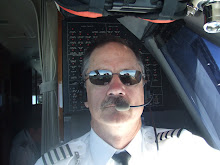


 Posts
Posts

